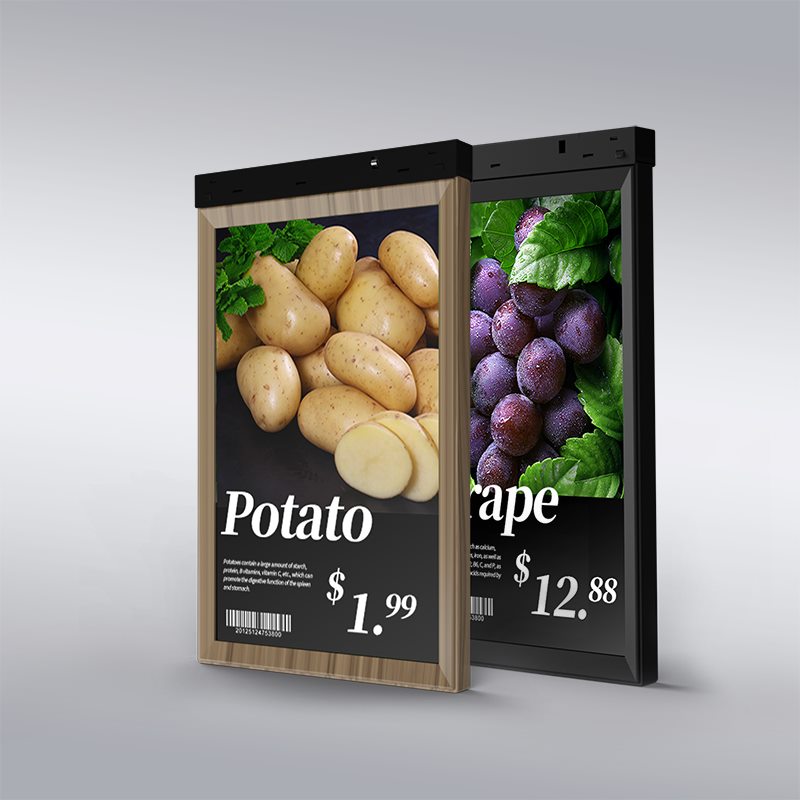
This guide explains the pharmacy pricing challenge, where ESLs help, why resolution matters here more than in general retail, and which label sizes fit pharmacy shelves. For the category basics, see what electronic shelf labels are; for the full industry solution, see the pharmacy ESL solution.
The Pharmacy Pricing Challenge
Pharmacy pricing is audited, and a single mismatched tag is a compliance exposure rather than a minor annoyance. Three conditions combine to make manual paper pricing fail: shelves are packed with small SKUs on narrow peg hooks; product variants and batches change constantly; and unit pricing must stay legible in a crowded space. A busy pharmacy simply cannot keep thousands of tiny paper tickets accurate by hand.
| Condition | Why paper struggles | What ESL changes |
|---|---|---|
| Audited pricing | Any mismatch is a compliance risk. | Shelf mirrors POS; changes are logged. |
| Dense peg hooks | Crowded tickets get cramped and illegible. | High-DPI tags stay readable at small sizes. |
| Frequent variant change | Constant reprinting, easy to miss one. | Updates propagate from the product master. |
Where ESL Helps
Four capabilities matter most in a regulated, high-density environment:
- Compliance-grade accuracy — every label mirrors the POS, so the audited price and the shelf price always match.
- Audit trail — each price change is logged with timestamp and source, giving a defensible record for regulators and internal review.
- High-resolution fine print — crisp ~183 DPI e-paper renders unit price, dosage and batch detail legibly even on 1.54″–2.13″ labels.
- Instant variant updates — reformulations and batch changes propagate from the product master without reprinting.
Compliance and the Audit Trail
The audit trail is the feature that turns a compliance risk into a defensible record. Because a networked ESL system writes every price from a single source and logs when it changed and what triggered it, a pharmacy can demonstrate to an auditor that the shelf price matched the register at all times — something paper, which leaves no history, cannot do. Pair that with the accuracy of a single source of truth and the two most common pharmacy pricing failures — a stale shelf ticket and an undocumented change — disappear together. This is the same accuracy argument we make for general retail in ESL vs paper labels, sharpened by the fact that in pharmacy the cost of a mismatch is regulatory, not just a refund.
Recommended Labels for Pharmacy Shelves
For peg hooks and narrow shelves, compact 1.54″, 2.13″ and 2.66″ high-resolution labels fit best; standard 2.9″ suits wider gondola sections. Match the size to the content and the shelf rather than defaulting to one size everywhere.
| Size | Best for | Typical content |
|---|---|---|
| 1.54″ | Peg hooks, smallest SKUs | Price, unit price, name. |
| 2.13″ | Dense pharmacy shelving | Price + dosage/unit detail. |
| 2.66″ | Health & beauty aisles | Price, promo, extra fields. |
| 2.9″ | Wider gondola sections | Fuller product info, QR codes. |
Source: AiESL size range. Refrigerated medicine cabinets need cold-rated variants — see ESL battery life for why temperature matters. Browse the full range on the products page.
Planning a pharmacy rollout? Request a custom quote or explore the pharmacy solution.