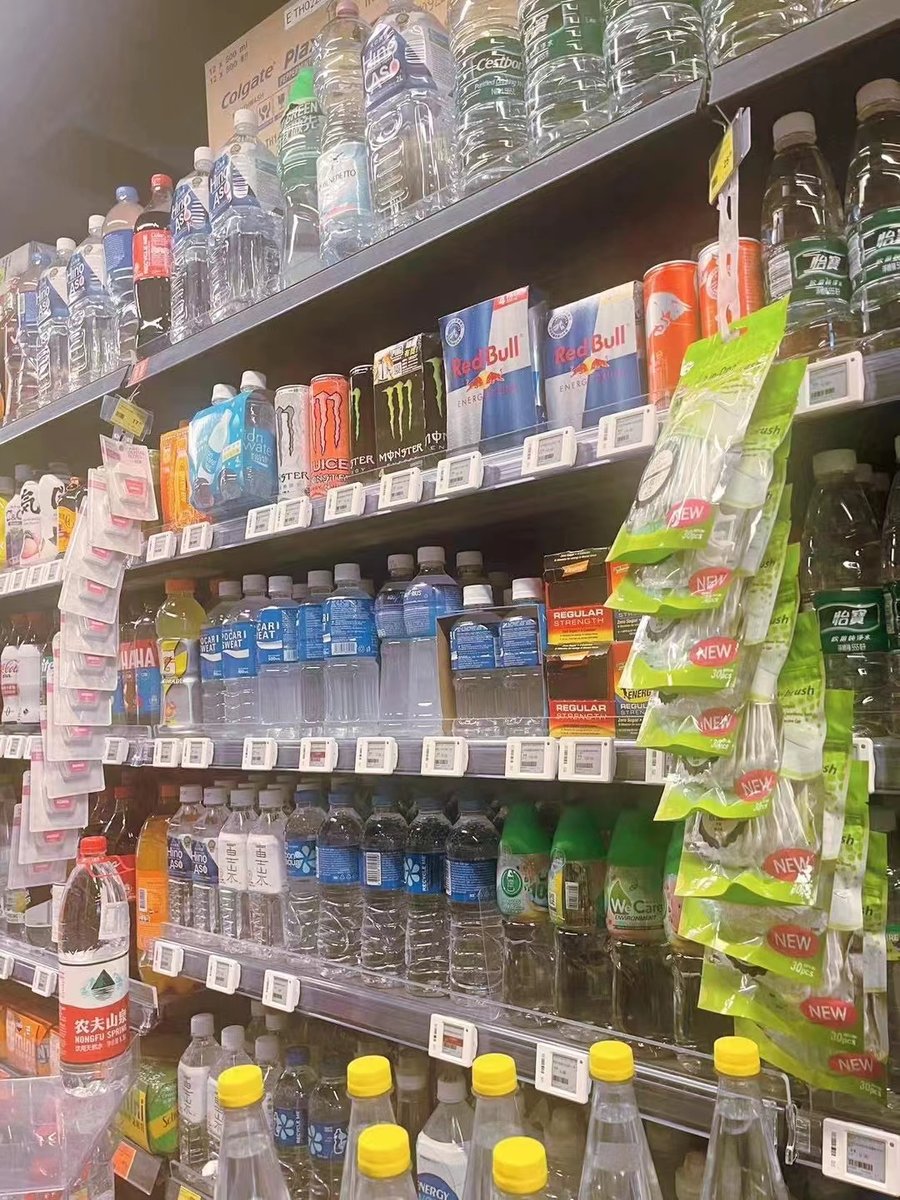
A national chain can amortise an ESL programme over thousands of stores; a single independent store can often get by with paper. A regional chain sits in between, and that is exactly where the decision is hardest. This page answers the question for that middle, using public deal values, peer-reviewed research and current regulation. It deliberately does not repeat our general ROI method — for the formula and a worked store-level example, see how to calculate ESL ROI.
Why Is the ESL Decision Different for a Mid-Size Chain?
Because a regional chain carries national-chain fixed costs on a smaller store base. Integration with POS and ERP, label templates, IT security review, training and vendor management cost roughly the same whether you have 30 stores or 3,000. Spread across fewer stores, they weigh more heavily on payback.
| Factor | Single store | Regional chain (20–200 stores) | National chain (1,000+) |
|---|---|---|---|
| Integration and setup cost per store | Low (simple POS link) | Meaningful — one project, few stores to share it | Negligible per store |
| Buying power on hardware | List price | Moderate — tender between vendors | Strongest |
| Internal IT capacity | None | Small team; integration is a real constraint | Dedicated programme team |
| Promotional intensity | Varies | Often high — weekly circulars across the chain | High |
| Biggest risk | Over-buying | Lock-in to one vendor with little renewal leverage | Execution at scale |
Framework: AiESL Research.
The arithmetic is simple. A hypothetical USD 150,000 integration project costs USD 15,000 per store across 10 stores but only USD 1,500 per store across 100. Below about 20 stores, choose a vendor whose standard connectors already fit your POS so the one-off work stays small — see ESL integration options.
What Does a Multi-Store ESL Rollout Cost?
Public deals put regional-chain projects anywhere from about USD 54,000 to USD 170,000 per store, and the difference is scope, not price per label. Two recent contracts show the range.
| Deal | Stores | Value | ≈ per store | Scope |
|---|---|---|---|---|
| PLUS (Netherlands), 2025 | 265 | ~SEK 140M | ~USD 54,000 | Pricer, Dec 2025. Upgrade of existing installation to four-colour labels (avg ~11,500 labels per store); Pricer buys back 3 million used labels. Rollout 100 stores in 2026, 165 in 2027. |
| Sobeys (Canada), 2026 | 300–350 (est.) | USD 51M | ~USD 146,000–170,000 | Pricer with JRTech Solutions, Apr 2026. “Digital store transformation” over 18 months from May 2026, following a 50-store trial in 2024. |
Sources: Pricer press releases. Per-store values calculated by AiESL; SEK converted at the ECB 2025 average rates (EUR/SEK 11.0671, EUR/USD 1.1300). Contract scopes are as described by the vendor and may include items beyond labels.
For your own budget, start from label count per store and work up through gateways, software, installation and integration, as laid out in the ESL cost guide. Then separate the one-off chain-level costs from the per-store costs — that split is what decides whether your store count is big enough.
Where Does the Money Come Back?
Labor is the return everyone quotes; pricing agility on perishables is the return the best independent research actually measured. A chain should count both, conservatively.
| Return | Best available evidence | How strong |
|---|---|---|
| Labor on price changes | Forrester study commissioned by Pricer: composite 500-store grocer, 18-month payback, 277% five-year ROI, from price-change automation, faster in-store picking and replenishment. | Vendor-commissioned model; no independent before/after study published. |
| Gross margin on perishables | Peer-reviewed study of an international grocer that adopted ESLs: gross margins rose substantially, with more units sold at lower prices, mainly in short-shelf-life categories; price changes became smaller, more frequent and mostly downward. | Strongest independent evidence available (Management Science, 2021). |
| Price accuracy | US inspections found grocery stores mispriced 1.7% of items, and 17% of stores failed the 98% standard. ESLs remove the shelf-update gap behind many errors. | Official data on the problem; no study yet of ESL vs paper accuracy. See ESL pricing accuracy. |
Sources: Pricer / Forrester Consulting (2022); Stamatopoulos, Bassamboo & Moreno, Management Science 67(1), 2021; NCWM 2024 National Price Verification Survey as summarised on our pricing-accuracy page.
With an industry net margin of about 1.6%, even a fraction of a percentage point of gross margin recovered on fresh categories can rival the labor saving. Which of the two dominates is debated — we weigh the evidence in are ESL labor savings overstated?
How Should a Regional Chain Phase the Rollout?
Pilot, prove, then roll out in waves — the pattern every recent regional deal follows.
| Phase | Scope | Duration | Exit criterion |
|---|---|---|---|
| 1. Pilot | 2–3 stores, including your hardest format (large, many freezers) | 8–12 weeks | Full-store update time, failed-update rate and integration effort within agreed limits |
| 2. Trial | 10–15% of the estate | 3–6 months | Measured hours saved per store and price-error rate vs control stores |
| 3. Rollout | Remaining stores in waves, highest-volume first | 12–24 months | On budget per store; no rise in support tickets per wave |
| 4. Optimise | Markdown rules on perishables, promo automation | Ongoing | Gross margin and waste in fresh categories vs baseline |
Framework: AiESL Research, informed by the PLUS and Sobeys rollouts. Gateway planning for each store type: base station coverage calculator.
What Risks Should a Grocery Chain Price In for 2026–2027?
Three risks now belong in every regional chain’s business case: regulation, shopper trust and lock-in.
| Risk | What happened | Mitigation |
|---|---|---|
| State regulation | New Jersey’s Fair Price Protection Act (signed July 2026) bans individualised pricing based on consumer data and imposes a one-year moratorium on new ESL installations, taking effect on the first day of the seventh month after enactment; replacing existing labels is allowed. | Map every state you trade in; sequence rollout outside affected states first; take legal advice. |
| Labor and public scrutiny | An AFL-CIO Tech Institute brief (September 2026) estimated 44,000–192,000 US grocery jobs at risk from ESLs and urged restrictions; its estimates rely on vendor marketing claims. | Plan redeployment of saved hours to service and fresh; communicate it. |
| Shopper trust | Shoppers associate digital tags with surge pricing, although a 180-million-observation study found no such effect. | Publish a same-price-for-everyone, no-surge policy. |
| Vendor lock-in | Two vendors shipped about two-thirds of labels in early 2026. | Require written exit terms and open integration; see ESL vendors compared. |
Sources: New Jersey Legislature (S3612/A4085) and Grocery Dive; AFL-CIO Tech Institute via Supermarket News; Sanders, Stamatopoulos & Bray working paper via UC San Diego; RUNTO. This is not legal advice — confirm with a qualified adviser in each state.
Go, Wait or Stay With Paper? A Decision Checklist
If most answers fall in the left column, start a pilot now; if most fall on the right, paper may still be the rational choice.
| Question | Go | Wait | Stay with paper |
|---|---|---|---|
| Price changes per store per week | Thousands, weekly promo cycle | Hundreds | Few; stable prices |
| Hourly wage level | Mid to high | Moderate | Low |
| Number of stores | 20+ | 5–20 | 1–4 |
| Share of sales in fresh / perishables | High | Medium | Low |
| POS / ERP integration readiness | Standard connector exists | Custom work needed | No IT capacity |
| Regulatory exposure | No restrictions in your states | Pending bills | Moratorium in your main state |
Framework: AiESL Research. Put your own numbers through the ESL ROI calculator before the board meeting.
We sell electronic shelf labels, so we have an obvious interest in the answer being yes. That is why this page shows when it is not. If you want a second opinion on your own numbers, our supermarket team will review your case — including telling you to wait.
Sources
- Pricer — Dutch supermarket chain PLUS places 140 MSEK order (Dec 2025)
- Pricer — PLUS case study (labels per store)
- Pricer — Sobeys expands its Pricer Plaza installation
- Pricer and JRTech Solutions sign USD 51M digital store transformation deal with Sobeys (Apr 2026)
- Pricer — Forrester TEI study: payback period of 18 months
- Stamatopoulos, Bassamboo & Moreno — The Effects of Menu Costs on Retail Performance, Management Science (2021)
- UC San Diego — New research debunks fears of supermarket surge pricing with electronic shelf labels
- Grocery Dive — Grocery industry profit margins fall to pre-pandemic levels (FMI)
- Grocery Dive — New Jersey bans dynamic pricing
- New Jersey Legislature — S3612/S3717 bill text
- Supermarket News — Electronic shelf labels could cost workers up to $6.9B annually (AFL-CIO Tech Institute)